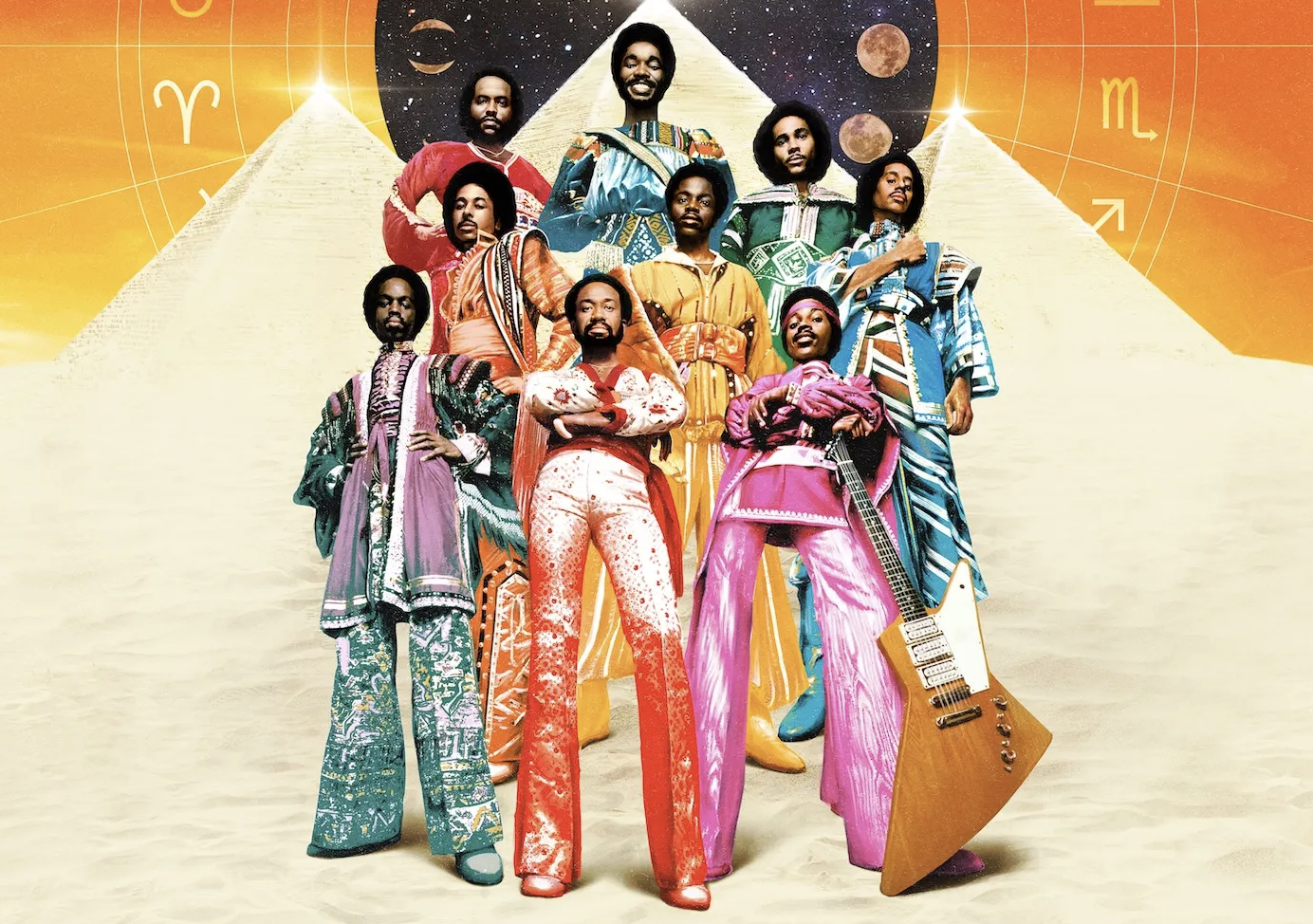
Full disclosure: Earth, Wind and Fire is among my all-time favorite bands. Their live performances shine even brighter than their recorded auditory canon.
The first temptation, in approaching the iconic band, is to surrender to the shine. The horns arrive like sunlight through stained glass. Verdine White’s bass lines levitate. The costumes seem less designed than beamed in from a benevolent planet where everyone has mastered both choreography and spiritual balance. The group’s great achievement was not merely that it filled dance floors at my record hops. It made ecstasy sound organized. It made uplift feel engineered.
Questlove’s new HBO documentary, Earth, Wind & Fire: To Be Celestial vs. That’s the Weight of the World, understands this seduction, but refuses to be overcome by it. Like his earlier Summer of Soul, the film is both celebration and excavation. It honors the music’s radiance while asking what kind of pressure, deprivation, discipline, and loneliness were required to create it. The result is a portrait of a band that preached cosmic harmony while orbiting a man who, by all accounts, could be painfully difficult to reach.
That man is Maurice White, the founder, architect, and ruling intelligence of Earth, Wind & Fire. To the group’s surviving members, including Philip Bailey, Verdine White, and Ralph Johnson, Maurice was a visionary captain. He was also a distant presence, a perfectionist who built a communal sound out of private wounds. Questlove traces some of that distance to childhood abandonment, suggesting that Maurice’s hunger for order, beauty, and transcendence may have grown from an early experience of instability. The film does not reduce him to his pain. It lets the mystery remain, which is a rarer and more generous form of biography.
The documentary is at its best when it allows the contradictions to breathe. We hear of the band facing a hostile Philadelphia audience by sitting silently in lotus position until the room submitted to their calm. We hear musicians and admirers describe the group’s arrangements with the reverence usually reserved for cathedrals. Former President Barack Obama and Michelle Obama recall the band not as a cultural artifact but as emotional weather, the kind of music that instructed bodies how to move toward one another. Flea marvels at Verdine White’s bass playing. Jimmy Jam treats the records as intricate machines. The testimony accumulates into a persuasive case: Earth, Wind & Fire did not simply make hits. It created an atmosphere.
Yet Questlove keeps tugging the camera back toward earth. The film’s most piercing passages concern the cost of Maurice White’s ambition. Family members describe a man capable of immense creation and limited intimacy. His son, Kahbran, recalls a father who did not quite know how to be one. The observation lands without melodrama, which makes it hurt more. In this telling, Earth, Wind & Fire was not only a band. It was a temple, a corporation, a mission, and, sometimes, a rival household.
Even “September,” one of Keener13.com’s most requested tunes and an indestructible soundtrack I played at endless wedding receptions, is given a biographical shadow. The famous date in its opening line, the twenty-first night of September, is connected here to the expected birth of Maurice’s son. The child arrived early, but the lyric remained, detached from circumstance and released into pop eternity. That is one of the film’s slyer revelations: songs outlive the lives that made them, and sometimes become brighter as the particulars fade.
Questlove is too intelligent a filmmaker to mistake exposure for insight. He does not punish Maurice White for failing to resemble the joy he sold to the world. Nor does he excuse the hurt left in the wake of genius. Instead, he presents the music as a miracle with human scaffolding still visible. The horns still blaze. The voices still ascend. The rhythm still insists that a better version of ourselves is possible. But now, beneath the shimmer, we hear the strain of holding it all aloft.
That is the documentary’s accomplishment. It gives Earth, Wind & Fire back their gravity without diminishing their flight. It reminds us that transcendence is rarely weightless, and that even the most celestial music may be made by people struggling, fiercely and imperfectly, to rise.