As of May 31, DirecTV subscribers across 36 television markets lost access to more than 50 local stations owned by the E.W. Scripps Company after the two companies failed to reach a new retransmission agreement. Viewers suddenly found themselves unable to watch local news, network programming, sports, and other content carried by Scripps-owned ABC, CBS, NBC, and FOX affiliates.
Predictably, both sides immediately launched public relations campaigns designed to convince consumers that they are the victims.
Scripps says it needs higher fees to support local journalism, community coverage, and the growing costs of producing news and sports programming. DirecTV says it is standing up for customers who are already facing rising monthly bills and cannot absorb yet another programming-related price increase.
I’m a former cable guy who has lived through these periodic wars between two corporate behemoths who need one another to survive.
Both arguments contain elements of truth.
Both arguments also miss the larger story.
The real issue is not local journalism. It is not customer affordability. It is not community service.
The real issue is shareholder value.
Both Scripps and DirecTV operate in businesses facing long-term structural decline. Linear television viewing continues to fall. Consumers are increasingly abandoning traditional pay television subscriptions. Younger audiences are consuming content through streaming platforms, social media, and on-demand services rather than scheduled broadcasts.
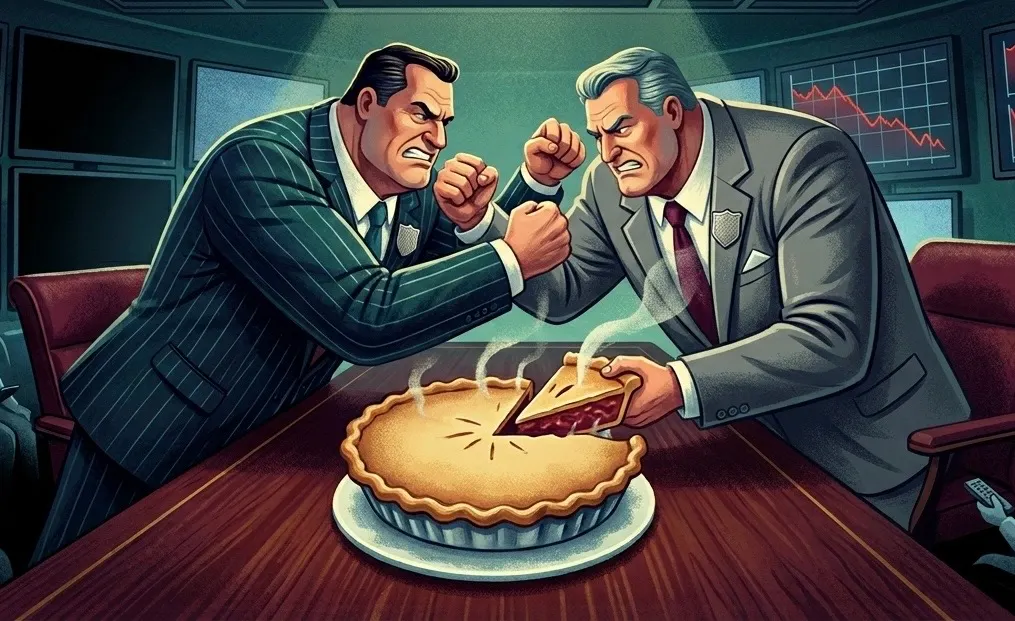
The pie is shrinking.
And when industries stop growing, companies begin fighting over how the remaining revenue gets divided.
That’s exactly what we’re witnessing here.
Scripps wants a larger share of retransmission revenue because retransmission fees have become one of the few remaining growth engines available to local broadcasters. Advertising revenue has become increasingly volatile as marketers shift budgets toward digital platforms where audiences are easier to target and measure.
DirecTV, meanwhile, is struggling to maintain profitability as millions of subscribers continue to cut the cord. Every programming fee increase makes its service more expensive and potentially drives even more customers away.
Both companies are trying to protect their margins in a declining marketplace.
What’s particularly striking is that both organizations have spent years attempting to increase operating income through remarkably similar strategies.
Both have reduced staffing.
Both have consolidated operations.
Both have pursued efficiency initiatives that often translate into fewer employees doing more work.
Both have reduced the depth and breadth of customer-facing services.
Across the television industry, local newsrooms have become leaner. Reporters cover larger geographic areas. More content is shared among stations. News programming is increasingly centralized.
Across the pay television industry, customer service operations have been streamlined, outsourced, automated, or otherwise reduced in the name of efficiency.
The language differs, but the goal is the same.
Lower costs.
Higher margins.
Improved shareholder returns.
That doesn’t necessarily make either company evil. Publicly traded corporations exist to create value for shareholders. Investors expect management teams to maximize returns.
But consumers should recognize what’s actually happening when these disputes occur.
The commercials and press releases suggest that one side is fighting for local journalism while the other is fighting for consumers.
In reality, both sides are fighting for economics.
The irony is that viewers have more alternatives than ever before.
Many affected stations remain available free with an over-the-air antenna. Others stream local newscasts through free ad-supported services. Consumers can switch to YouTube TV, Hulu + Live TV, Fubo, or countless other platforms. Some DirecTV subscribers can even choose to drop local channels altogether and save money.
That reality highlights the fundamental challenge facing both companies.
For decades, broadcasters and pay television distributors depended on a relatively captive audience. Consumers had limited choices and few alternatives.
Those days are gone.
The Scripps-DirecTV dispute isn’t really a battle between a broadcaster and a satellite company.
It’s a battle between two legacy business models trying to preserve revenue streams in a media environment that increasingly doesn’t need either one.
The blackout will eventually end. A new agreement will be signed. The stations will return. The press releases will stop.
But the larger trends won’t change.
More consumers will cut the cord.
More viewing will migrate to streaming.
More pressure will be placed on both broadcasters and distributors to find new ways to grow.
And until they do, viewers can expect more blackouts, more finger-pointing, and more corporate messaging designed to convince us that someone else is to blame.
The truth is much simpler.
This fight isn’t about viewers.
It’s about who gets the last slice of a shrinking pie.
Scott Westerman was a cable executive from 1992-2010.