If your child with Down syndrome has a paraprofessional, that person probably spends more hours with your kid each week than anyone except you. More than the classroom teacher. Often more than the special education teacher whose name is on the IEP.
That’s a lot of influence for a job that usually pays close to minimum wage and comes with very little training. Most paras I’ve known took the job because they care about kids. Many of them are wonderful. But caring and skill are two different things, and when you’re a parent sitting across the table at an IEP meeting, it helps to know what skill looks like.
So, here’s my attempt at that. First, what a strong para brings to a classroom for a child with Down syndrome. Then, the part that gets talked about less: what you can do from home to make their work go better.
What a skilled para brings
1. They understand how kids with Down syndrome tend to learn
Every child is different, and a good para learns your child, not a diagnosis. Still, there are patterns worth knowing, and a para who knows them will make better choices all day long.
Many children with Down syndrome are strong visual learners. They often understand far more language than they can say. Short-term auditory memory tends to be a weak spot, so a long string of spoken directions can fall apart halfway through. Low muscle tone can make writing, cutting, and even sitting upright for a long time genuinely tiring. Processing time is often longer, too.
A para who gets this will write the steps down or show a picture instead of repeating the instruction louder. They’ll give your child a few extra seconds to answer before jumping in. They won’t read slow speech as not knowing.
2. They know how to fade
This is the big one. The best paras are always trying to make themselves less necessary.
That means using the least amount of help that works. A glance or a point before a verbal reminder. A verbal reminder before a hand on the pencil. And then stepping back as soon as the child can manage. A para who does the same amount of prompting in May as in September hasn’t failed exactly, but something isn’t moving.
Ask about this directly. “How are you deciding when to step back?” is a fair question, and a skilled para will have an answer.
3. They support communication without taking it over
A good para helps your child be understood by teachers and classmates. They don’t become the translator who answers for them. If your child uses signs, a communication device, or picture supports, the para should know the system well and use it consistently, including at lunch and recess.
Watch for a para who models language and then waits. That pause gives your child a chance to talk.
4. They read behavior as information
Kids with Down syndrome sometimes get labeled “stubborn.” Usually there’s something underneath: the work is too hard, the room is too loud, a transition came without warning, they’re tired, or they can’t hear well that day. (Ear infections and hearing loss are common, and they come and go.)
A skilled para looks for the reason before reacting. They use visual schedules, warnings before transitions, and first-then language. They follow the behavior plan if there is one. And they tell the teacher what they’re seeing, so patterns can be spotted.
5. They build social connection
This might be the most underrated part of the job. A para can help your child connect with other kids, or end up standing between them.
The good ones set up partner work, step away during group activities, and coach classmates on how to include your child without making a big deal of it. At recess, they’re nearby, not attached. Friendships don’t form well with an adult standing in the middle.
6. They keep an eye on health and safety
Depending on your child, this might include toileting support, feeding, watching for signs of fatigue, or knowing what to do about a heart condition, thyroid issue, or seizures. A para should know your child’s health plan and be told plainly what to watch for. They should also handle personal care in a way that protects your child’s dignity.
7. They’re a real member of the team
A para isn’t supposed to design instruction. That’s the teacher’s job. But a strong para follows the plan carefully, adapts materials when asked, keeps simple data on IEP goals, and speaks up when something isn’t working. They communicate well with the teacher, and they keep information about your child private.
When help gets in the way
There’s a well-known 1997 study by Michael Giangreco and colleagues with a title that sums it up: “Helping or Hovering?” They watched instructional assistants working with students with disabilities in general education classrooms and found that constant closeness often backfired. Kids came to depend on the adult. Classmates interacted with them less. Teachers handed off responsibility for the student to the para.
None of this comes from bad intentions. Hovering usually comes from wanting to help. It also comes from pressure. A para may feel that if your child struggles or gets upset, it reflects on them.
Here’s what it can look like:
• The para sits right next to your child all day, every day
• Your child looks to the para before trying anything
• The para answers questions that were asked of your child
• Classmates talk to the para about your child, not to your child
• The teacher rarely works directly with your child
If you see these things, it doesn’t mean the para is bad at the job. It usually means nobody told them that independence is the goal, or nobody gave them permission to step back. That’s something you and the team can fix.
How parents can help
Write a one-page profile of your child
Paras often get almost no time with the IEP before school starts. Some never see the whole thing. So make it easy. One page, with a photo. What your child loves. What upsets them and what calms them down. How they communicate “I need a break” or “I don’t understand.” Health things to watch for. Two or three things that work well at home.
This single page can save a para weeks of guessing. Ask the teacher to pass it along, or hand it over yourself at the start of the year.
Ask to meet the para early
A short meeting before school starts, or in the first couple of weeks, goes a long way. Paras are often left out of IEP meetings and parent conferences. If you want them there, ask. You can request that the para attend the IEP meeting or at least get a summary afterward.
Set up a simple way to communicate
A notebook that goes back and forth in the backpack works. So does a short weekly email, or a checklist with a line for notes. Keep it light. A para who has to write a paragraph every day will burn out on it fast.
One thing to know: in many districts, the teacher is supposed to be your main contact, and paras are told not to share certain things directly. Respect that. If you have a concern about instruction, go to the teacher first. Use the para channel for the daily stuff: how lunch went, a tough morning, a new word your child used.
Share what’s happening at home
Tell them when your child slept badly, has a cold, or is dealing with a change at home. Tell them when something clicked. If your child just learned to zip their coat or can now read a new set of sight words, the para can build on it. Things go better when home and school are working on the same skills.
Make independence the shared goal, out loud
Say it in the IEP meeting: you want the para’s support to fade over time. Ask that goals be written with that in mind. Then back the para up when they step away and your child struggles a bit. A little struggle is how kids learn. A para who knows you’re on board with that will feel freer to let it happen.
Push for training
Many paras get little or no training specific to Down syndrome. You can ask the school what training the para has had, and whether the district can provide more. National and local Down syndrome organizations often have materials written for educators, and some offer workshops. Passing along a good article or a short video is a kind thing to do, as long as it comes across as sharing, not correcting.
Say thank you, and be specific
This job is hard and often thankless. A note that says “Thank you for helping Maya join the game at recess yesterday” means a lot more than a generic gift card. It also tells the para exactly what you value, which is a quiet way of shaping what they do more of.
Raise problems early and kindly
If something is wrong, don’t wait for the next IEP meeting. Start with curiosity: “I noticed X. Can you help me understand what’s going on?” Most problems come from missing information or unclear direction, not from someone not caring. If talking with the para and teacher doesn’t fix it, bring in the case manager or ask for a team meeting. You’re allowed to request an IEP meeting at any time.
The goal is a kid who needs them less
The best paraprofessional I ever watched work spent most of the spring standing at the back of the room. She’d done her job so well that the kid she supported didn’t need her up close anymore. He raised his hand on his own. He had a lunch table. When he got stuck, he asked the kid next to him.
That’s what you and the para are working toward. Your part is mostly giving them what they need to know about your child, being clear that independence is the goal, and backing them up when they start to step away. With that kind of support from home, a para can get a lot done in one school year.
If you’ve had a great para, or a hard experience with one, I’d love to hear about it in the comments.
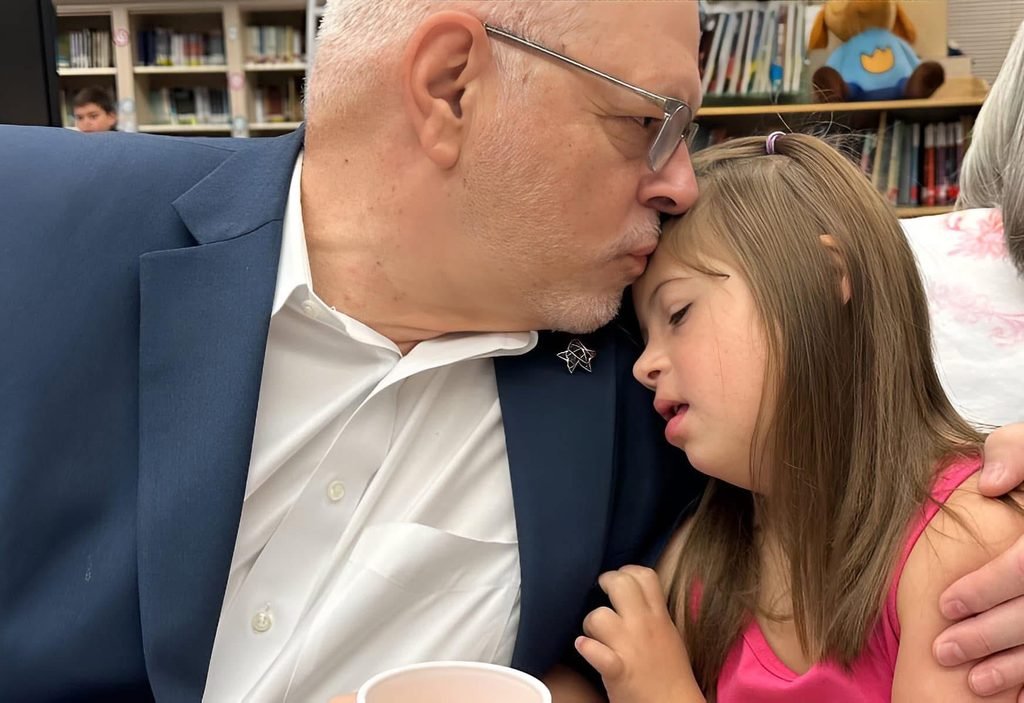
Scott Westerman has had a 50 year career as a communicator, corporate executive and academic. He’s also the grandfather of a beautiful child with Down syndrome. You can contact him via Scott@ScottWesterman.com