As we circle the 250th birthday of the American Experiment in unsettling times, I am drawn back to a lesson from history.
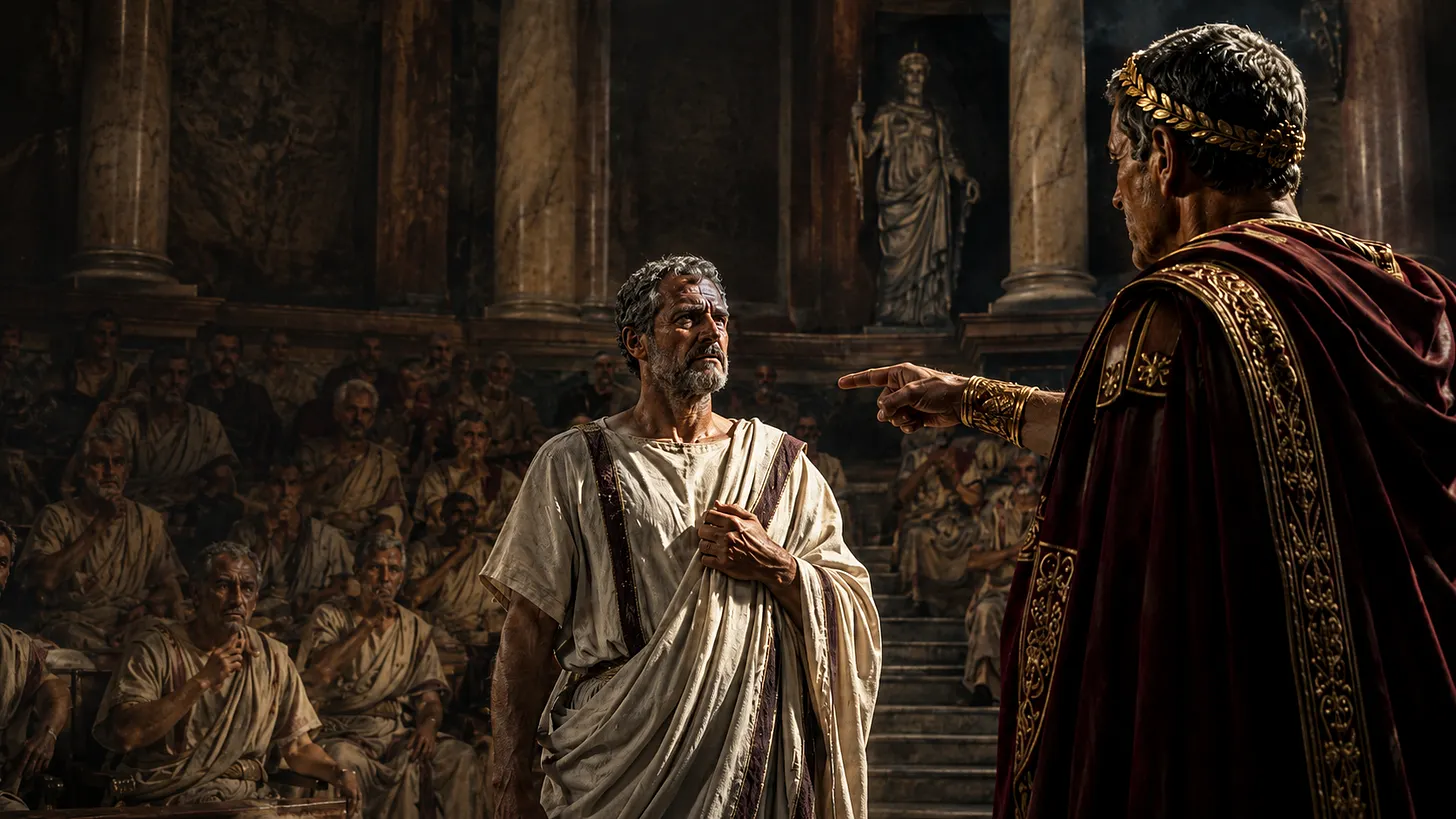
Helvidius Priscus was a Roman senator shaped by Stoic philosophy and by a stubborn belief that public office carried moral obligations. As the Emperor Vespasian rose to the throne in 69 CE, Helvidius watched Roman liberty narrow, watched the Senate reduced, watched men who knew better learn the habits of silence. But Helvidius refused to accept the fiction that the emperor’s preference was the same thing as the public good.
He criticized imperial overreach. He asked hard questions. He voted against the palace when conscience required it. He behaved, in other words, as though the Senate still mattered.
To Vespasian, this was intolerable.
According to Epictetus, the emperor finally confronted Helvidius and ordered him to stop his public dissent. Vespasian could bar him from the Senate, Helvidius answered, but as long as he was a senator, he had to enter and say what he thought was right.
In time, the emperor reached the final argument of autocracy. If you speak, he warned, I will kill you.
Helvidius answered with the calm that has carried his name across two thousand years: When did I ever tell you I was immortal? You will do your part, and I will do mine. It is yours to kill. It is mine to die without trembling.
From a distance, the story glows with the light of legend. It is easy to imagine Helvidius as a marble figure himself, standing alone against empire, while we look around our own public life and wonder where such people have gone. We see leaders trimming their convictions to fit the politics of the hour. We see principles treated as slogans, loyalty valued above truth, ambition disguised as service. It is not hard to conclude that our age lacks courage.
But that conclusion is too easy.
The deeper lesson of Helvidius is not that we should wait for better leaders to rescue us. It is that a republic is never merely a structure of laws, buildings, and offices. A republic is a habit of character. It is the daily decision of ordinary people to tell the truth, defend the vulnerable, honor the public good, and refuse to confuse comfort with conscience.
Helvidius did not stand against Vespasian because he imagined he could defeat the Roman army. He stood because he understood this:
The meaning of citizenship is not measured only by victory. It is measured by fidelity.
Helvidius did what was his to do. That is the part of the story that reaches for us.
Most of us will not be ordered before an emperor. Most of us will not be asked to risk our lives in the Senate chamber. But we are asked, every day, whether we will participate in the small surrenders that make larger ones possible.
We are asked when someone in a meeting is treated unfairly. We are asked when a falsehood passes around a dinner table and everyone waits to see who will challenge it. We are asked when cruelty is excused as humor, when corruption is dismissed as strategy, when silence is rewarded as wisdom. We are asked when our group demands agreement, when our career rewards caution, when our comfort depends on looking away.
In those moments, the republic is not an abstraction. It is not somewhere else. It is not only in Washington, or in statehouses, or in courts, or in campaign speeches. It is in the office, the classroom, the congregation, the neighborhood, the family gathering, the private conversation where conscience either speaks or steps aside.
Every time we choose silence when truth is required, we loosen one thread of the common fabric. Every time we tell the truth with humility and courage, we mend it.
Moral courage is built in ordinary life, choice by choice, until the person we hope to be becomes the person we are. It begins with the simple declaration that Helvidius made with his life: I will do my part.
We cannot control whether public officials rise to the responsibilities of their offices. We cannot command courage in others. But we can decide whether we will practice it ourselves.
History rarely asks us first for greatness. More often, it asks for honesty. It asks whether we will remember what our institutions are meant to protect. It asks whether we will act as though truth still matters, dignity still matters, and the public good is still worth defending.
And when the pressure comes, as it always does, history asks the same question Helvidius answered long ago:
What is yours to do?
Then it waits to see whether we will do it.